Flexible electronics, produced in Europe at industrial scale
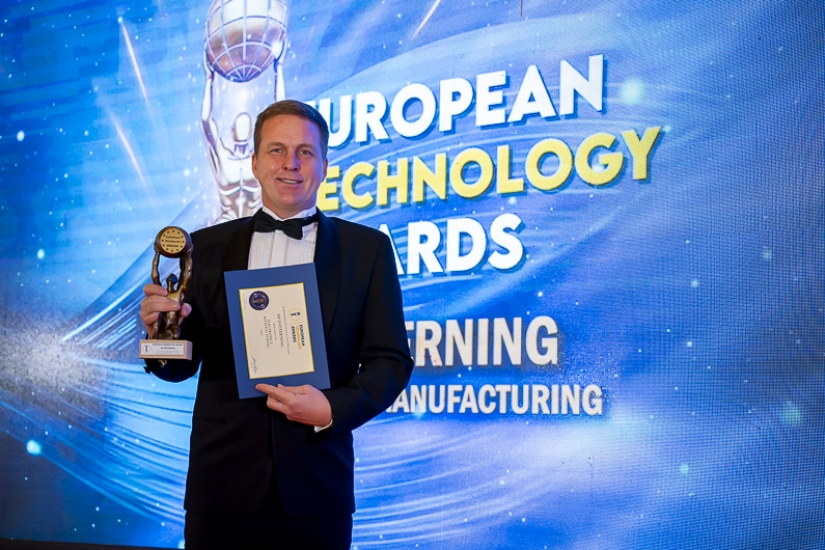
Staffan Nordlinder, CEO
Flexible electronics are replacing rigid boards and cables wherever products need to be thinner, lighter or shaped to fit. The market is growing fast, but most flex is still made with slow, chemical-heavy processes. Swedish company DP Patterning has set out to change that, and today it is Europe's leading flex electronics manufacturer.
The idea goes back to a founder's master thesis in 2001. DP Patterning was formed in 2013 as a spin-out from RISE (Research Institutes of Sweden), with the vision of zero-emission electronics and the mission to provide the world's most scalable and sustainable electronics manufacturing.
2024 marked the turning point. DP Patterning became a component supplier and received its first volume orders. The same year, Byggmastaren became the company's main owner, providing a strong long-term foundation for growth. In 2025 the company produced 1 million m² of flex. In 2026 it opened a new 3,500 m² facility in Norrkoping, with headquarters and production under one roof and an annual capacity of more than 10 million m². More than 5 million m² has been produced so far this year.
At the core is Dry Phase Patterning, a patented mechanical precision process. Instead of etching metal away with chemicals, the pattern is cut out of aluminium or copper clad aluminium on plastic film or paper, in one single step and continuously roll to roll. The same line can handle a pilot run or millions of square meters, and the metal that is cut away is collected and recycled. Fewer steps and fewer materials keep the cost per m² low as volumes grow, which makes onshoring flex production to Europe commercially viable.
DP Patterning puts its process to work in six commercial areas: heating circuits for EV batteries, mirrors and cameras; antennas and reflectors for telecom and satellite communication, where the company is Europe's leading supplier of passive antenna elements; RFID, NFC and smart packaging, including paper-based tags; sensors and electrodes; battery cell contact systems and other interconnects; and EMI shielding.
Looking ahead, DP Patterning plans compact micro-plants that add capacity close to customers, with the US market next in line. The 2030 vision is production sites around the world with 20 production systems, proving that European innovation can make electronics manufacturing both cost-efficient and sustainable.